
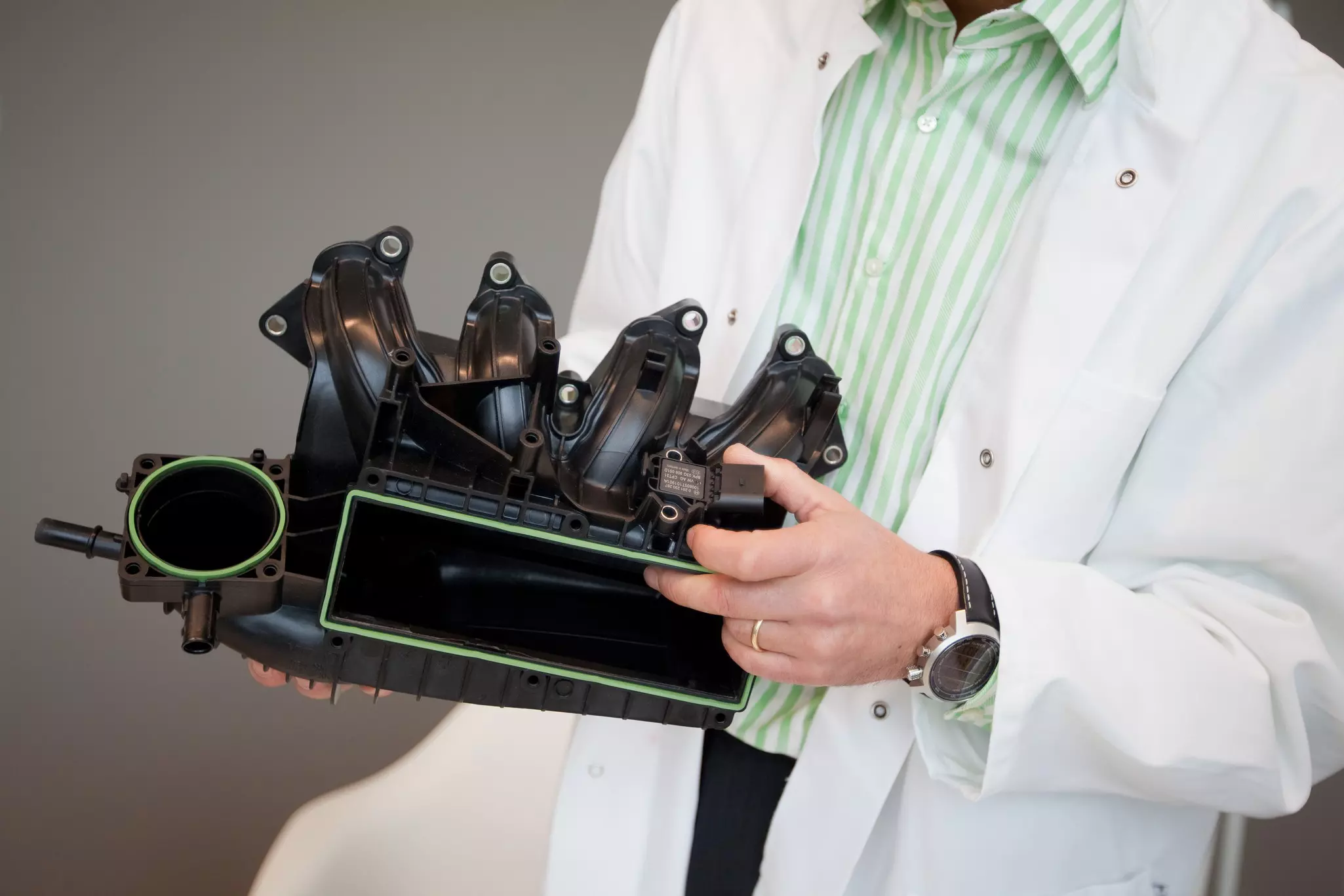
Envalior Design guide
Guidelines for designing thermoplastic injection molded parts
Design parts for optimal performance and issue-free molding
When designing parts for issue-free thermoplastic injection molding and to make optimal use of the inherent characteristics of thermoplastics, it’s important to consider a set of design principles. These assure that parts can be mass-produced smoothly and live up to expectations regarding dimensions, properties and appearance.
Part surfaces parallel to the draw direction of the mold should be tapered to facilitate ejection of the part after molding.
Draft AngleBy applying corrugations, ribs or gussets to a parts functional geometry, its structural performance can be improved
Corrugations, ribs and gussetsWhen designing in plastics, applying radii or chamfers to sharp corners is of key importance for a parts manufacturability, dimensional accuracy and l...
Radii and chamfersSpecifying a parts nominal wall thickness is the first step in determining its manufacturability, performance and cost.
Wall thicknessA boss is mostly a cylindrical protrusion on a part that can act as a positioning aid, a fixation point or a bearing surface.
BossesA hole in a part can have many functions, including acting as a fixation point, offering passage to other parts and reducing a parts weight.
HolesIn the design of injection molded plastic parts, thick sections should be avoided. Coring, locally eliminating material in these sections, is a way to...
CoringIf a part has an undercut, it means that it can’t be ejected from the mold without taking specific measures regarding tool construction or additional ...
Undercuts