
Blog
Helping you make a safer, lighter and more sustainable electric vehicle
Envalior collaborates with global automotive tiers and OEMs, leveraging decades of expertise in the automotive, electrical, and electronics industries...
By Alicia Garrison
Regional Communications Manager – Americas, Envalior
At SPE EAV 2026, Envalior revealed how advanced materials are unlocking safer high-voltage systems, smarter ADAS sensors, and lighter vehicle designs, proving that the future of mobility is being redefined at the material level.
At the 2026 Plastics in Electric & Autonomous Vehicles Conference held April 15-16 in Troy, Michigan, USA, Envalior experts highlighted how strategic material selection is unlocking new performance capabilities across EV charging, ADAS, lightweighting, and laser- welded components.
Shorter charging times for electrical vehicles and avoidance of efficiency losses during AC/DC conversion in factories are pushing the demand for 800V+ charging in EVs and next-generation AI data centers.
While higher voltages offer many technical advantages, the risk of electrical failure continues to grow. Preventing arcing while ensuring long-term reliability under extreme electrical stress is essential.
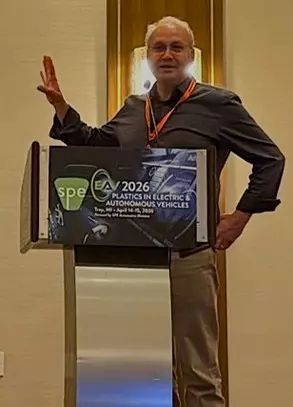
According to Dr. Tamim Sidiki, Mobility Segment Innovation Manager at Envalior, the key is to use materials that combine the best of Polymhigh CTI insulation plastics to deliver:
Envalior’s new class of high-CTI Pocan insulation materials meets these requirements, enabling safer, more reliable high-voltage connectors with strong electrical and thermal performance, corrosion resistance, dimensional stability, and proven orange color stability.
In a joint collaborative presentation, Röchling Automotive and Envalior showcased their award-winning thermoplastic roof cross beam for the Mercedes-Benz CLE Cabrio, demonstrating that advanced plastics can achieve the strength and durability demands of structural components.
Manufactured using Tepex® continuous fiber-reinforced composites in a single-step hybrid injection molding process, the team consolidated multiple functions (i.e., mounts, guides, bearings, and fastenings) into a single lightweight, high-strength structure. The result: reduced complexity, structural integrity, and design flexibility once thought unattainable with plastics.
“We were only able to make this work because of the teamwork with Envalior,” said Steven Wille of Röchling Automotive.
Recognized as a finalist for the 2025 JEC World Innovation Award, the project demonstrates how advanced materials can replace traditional metal solutions without compromise.
Laser welding is rapidly growing as a clean, precise, and high-performance joining method for advanced polymer applications. It enables faster cycle times, eliminates particle formation, and supports complex geometries, which are critical for integrated sensitive components such as sensors, CPUs, and other electronics.
But traditional materials often limit what laser welding can achieve. Having sufficient transparency combined with achieving strong welds in high temperature polymers has long been a challenge.
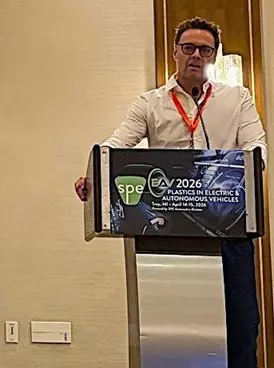
“There is growing interest in advancing laser welding as it opens new possibilities, particularly for applications where achieving sufficient laser transmission has been a challenge,” said Dr. Frank van der Burgt, Expert on Post Processing Technologies at Envalior.
Envalior is changing these challenges with materials engineered specifically for laser welding performance, including:
These innovations enable stronger welds, more complex geometries, and better integration of sensitive electronics, accelerating the adoption of laser welding across automotive applications. Next to the traditional laser transmission welding, absorbing-to-absorbing laser welding opens a completely new array of possibilities such as welding impact modified PPS with high weld strengths.
As ADAS sensors evolve, sensors are becoming smaller, more powerful, and more thermally demanding. Protecting these components from harsh environments while managing heat is increasingly challenging.
Envalior Application Development Engineer Madison Scally noted that radar systems are expected to shrink significantly over the next decade while integrating higher-performance chipsets that are more thermally demanding (i.e., heat-generating SiGe chips). This shift requires specialized materials tailored to each component:
Envalior’s portfolio is engineered to meet these needs, enabling reliable performance for radar, LiDAR, and camera systems in increasingly compact designs.
From structural components to high voltage safety and sensor reliability, Envalior is proving that material science is now a strategic lever for automotive performance. As OEMs push toward faster development cycles and more demanding requirements, advanced materials will be essential to staying competitive.
Learn More About Materials for Automotive
Watch TechTalk: Advances in Laser Welding

Alicia Garrison is a marketing professional with more than 25 years of experience. She has spent most of her career working in the areas of automotive – including autonomous driving, e-mobility and connected vehicles – aerospace, academia, commercial vehicles and environmental and quality management standards. She earned her bachelor’s degree in journalism from Central Michigan University.
Envalior collaborates with global automotive tiers and OEMs, leveraging decades of expertise in the automotive, electrical, and electronics industries...
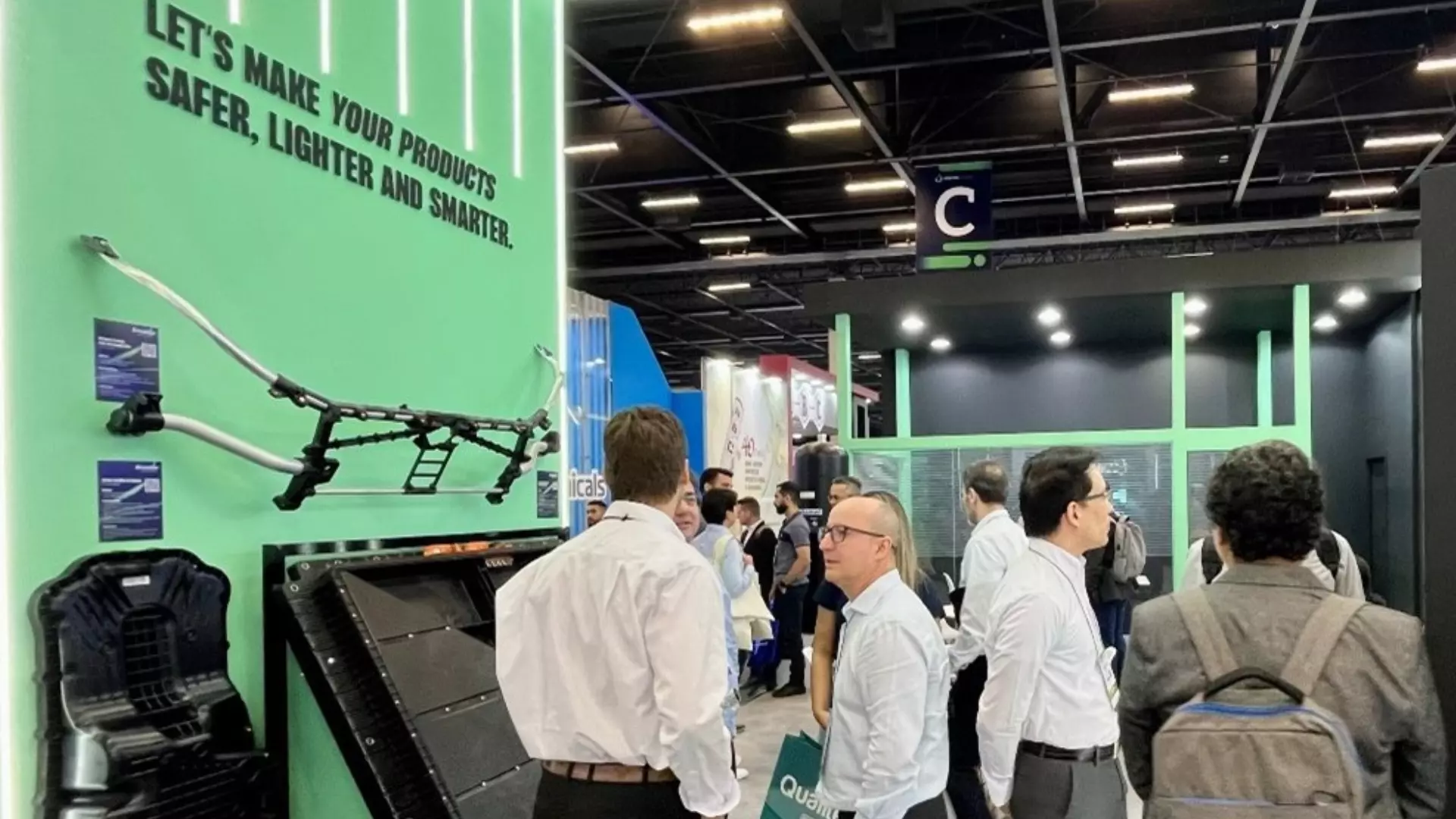
Envalior showcased its high-performance materials at Plástico Brasil 2025, focusing on sustainability and innovation. The company highlighted products...

As a design engineer in the electronics industry, you are aware of the demand for sustainable plastic parts with high quality mechanical properties a...