
Press Release
Discover Envalior’s materials powering the future of automotive fuel cells.
In the fuel cell market, many companies are competing, and it is a “winner take all” environment. You need to be first to market and do it right. If not, there could be repercussions for your brand. Material selection will have a strong influence on first-time right by improving lifetime, efficiency and safety.
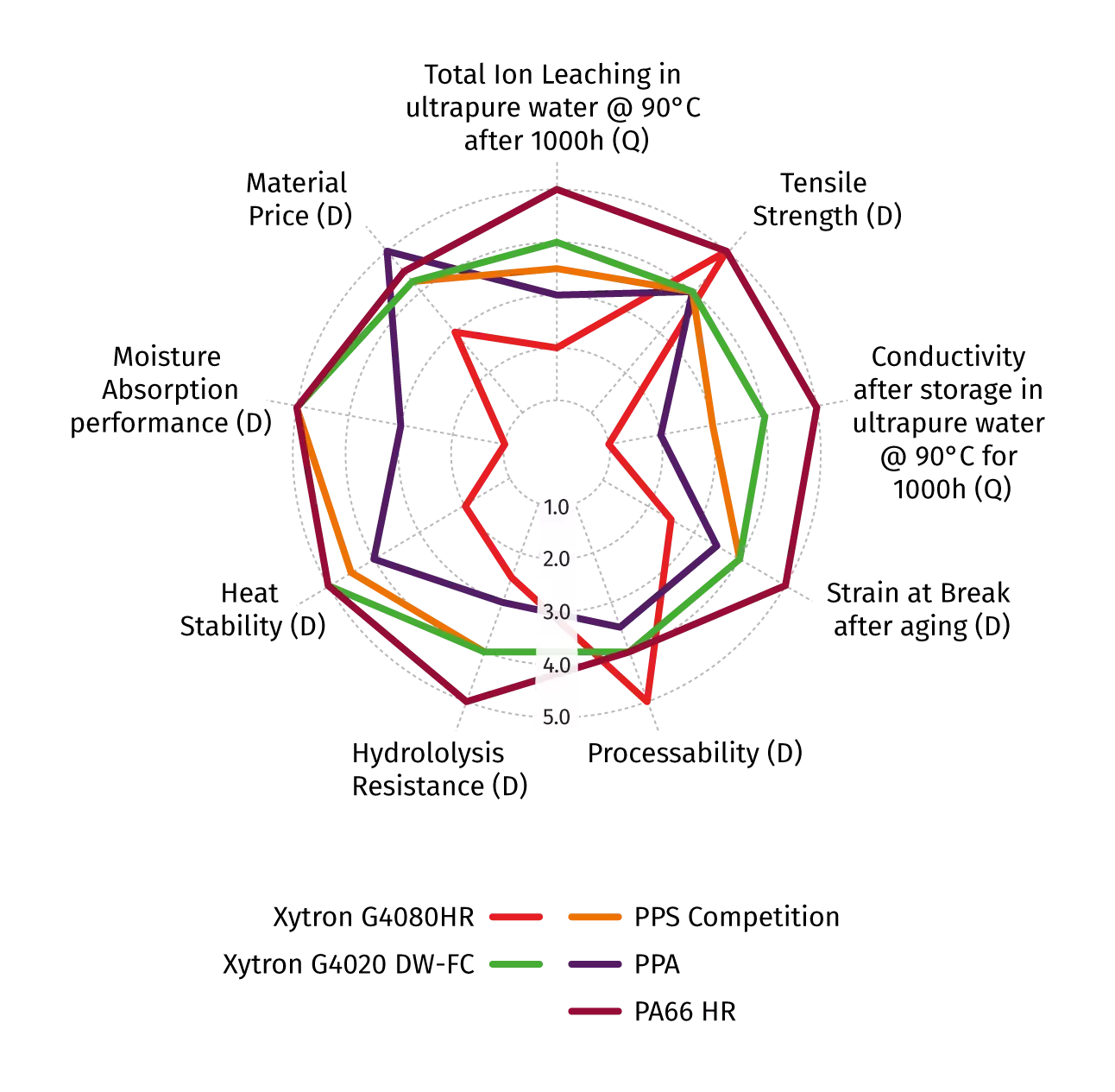
Fuel cell systems need to use materials that are pure. If not, ion leaching and hydrolytic and heat aging can occur. These two failure modes and the risks and consequences can hurt your brand image. Impure materials increase the risk of ion leaching, and higher water absorbing materials show more ion leaching, which you do not want. Also, impure materials increase the risk of hydrolytic and heat ageing— PA9T and PA66 are not good performers.

Fuel cell systems need to use materials that are pure. If not, ion leaching and hydrolytic and heat aging can occur. These two failure modes and the risks and consequences can hurt your brand image. Impure materials increase the risk of ion leaching, and higher water absorbing materials show more ion leaching, which you do not want. Also, impure materials increase the risk of hydrolytic and heat ageing— PA9T and PA66 are not good performers.
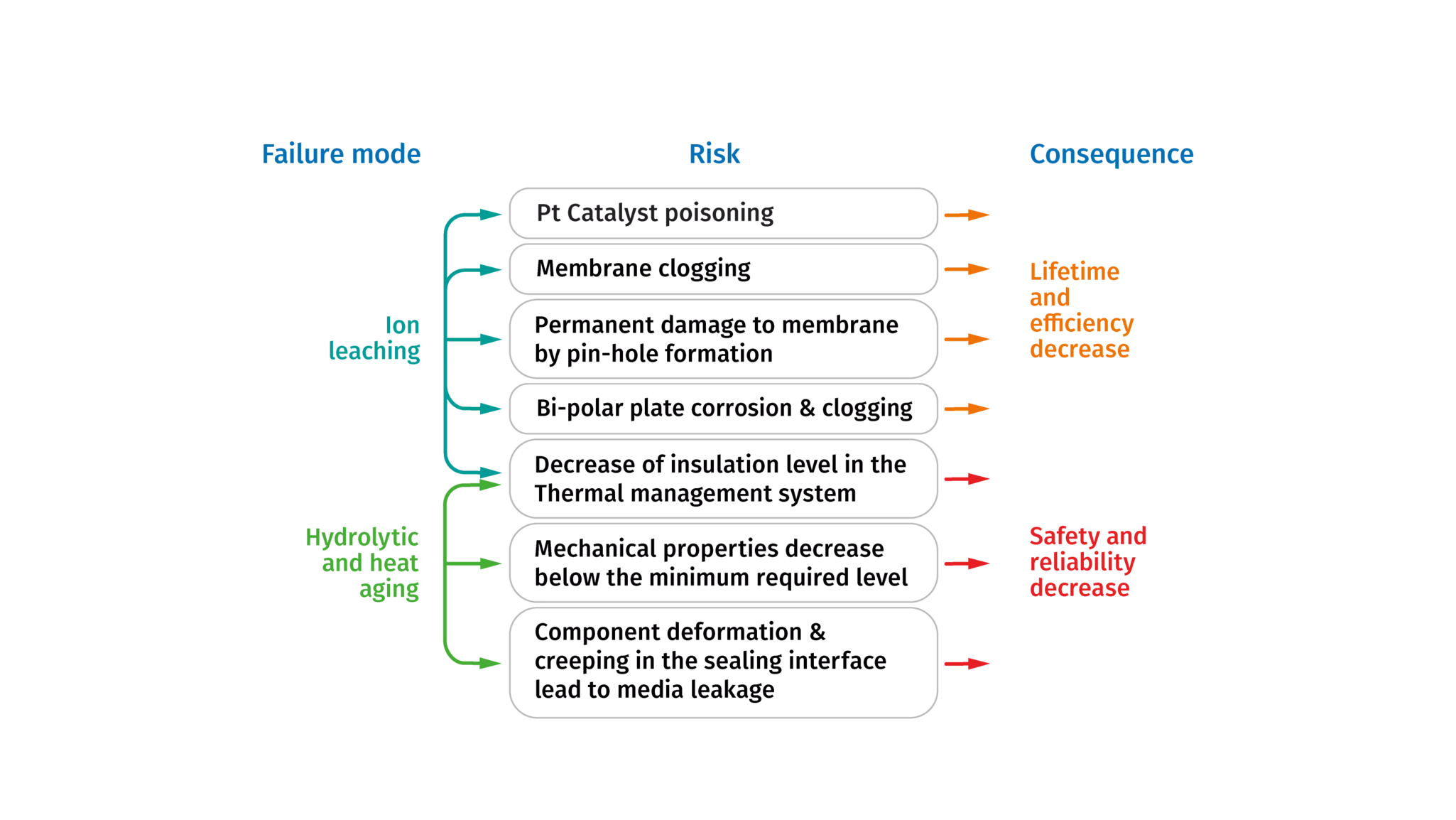
Cause & effect of ion leaching and hydrolytic and heating aging.
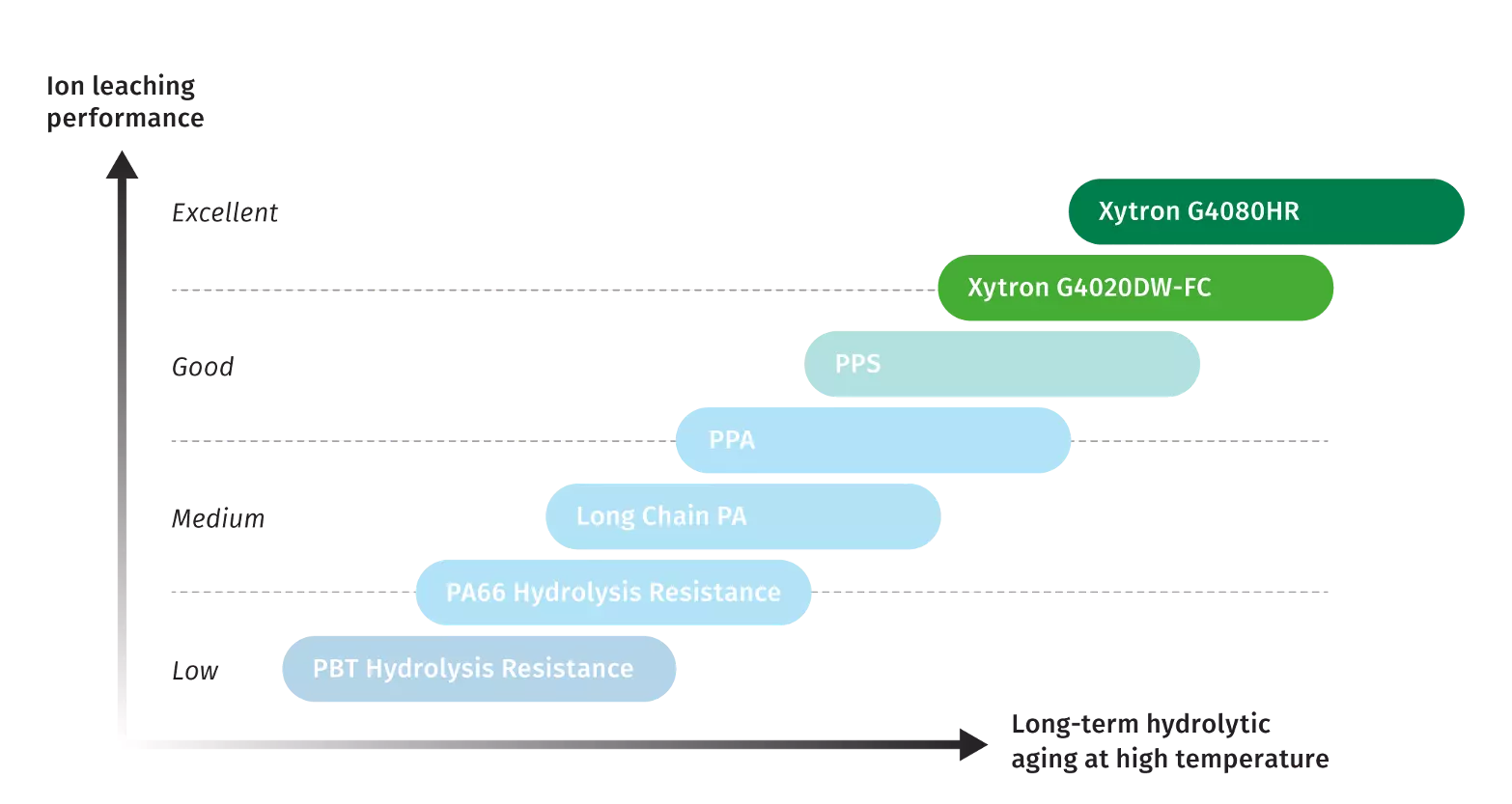
Envalior’s tailor-made PPS is the purest material solution on the market today and offers the best in performance in fuel cells available today.
Today, Xytron PPS is trusted by industry-leading manufacturers and Tier1s worldwide. Xytron PPS offers the lowest ion leaching and best strength and toughness retention in hydrolytic environment to ensure fuel cell systems are efficient, have a long life, and are safe and reliable. At Envalior, we are constantly evolving our material solutions to meet the demand for fuel cell applications.

Metal and PBT are ideal partners in overmolded metal conductors, such as those found in the powertrains of electric vehicles. However, for engineers f...